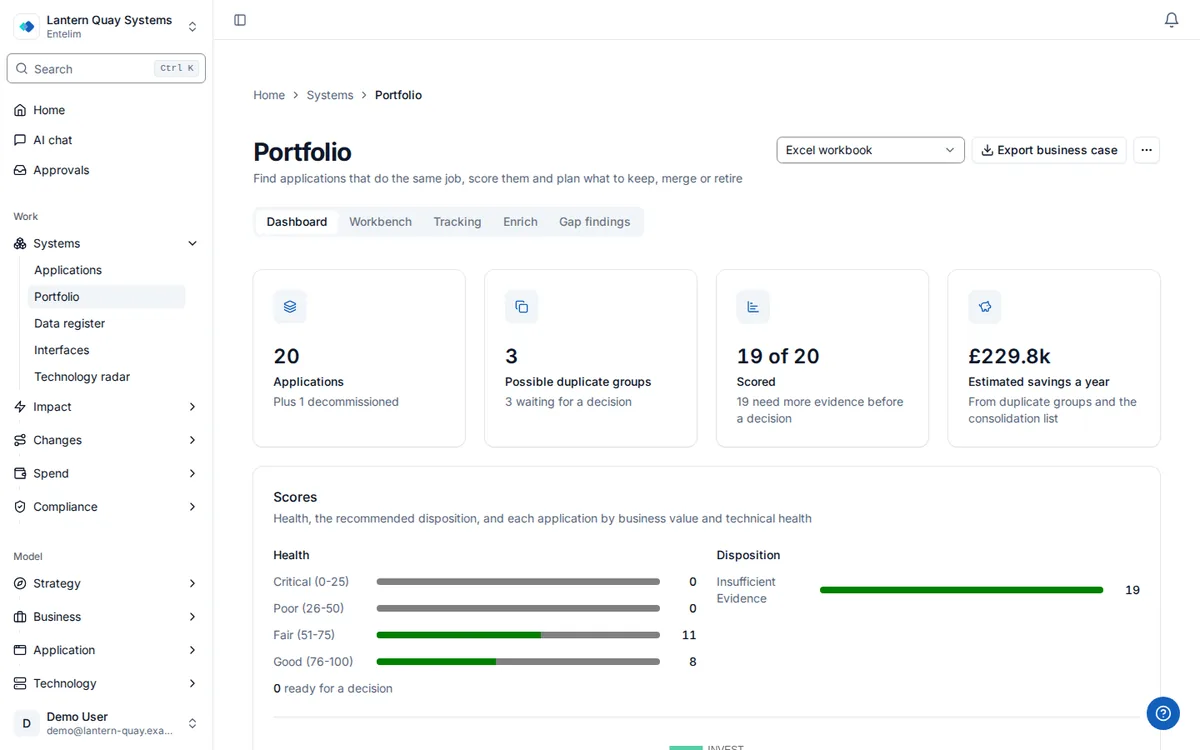
What application rationalisation is
Application rationalisation is the process of reviewing an organisation's applications and deciding, for each one, whether to keep, consolidate, replace or retire it. The goal is a smaller, cheaper, better-understood portfolio: fewer tools doing the same job, less licence spend on systems nobody needs, and a recorded reason for every application that stays.
The TIME model is the most common way to make the decision. TIME stands for Tolerate, Invest, Migrate and Eliminate. Tolerate means keep it as it is. Invest means the application is valuable but needs work. Migrate means the value is worth keeping but the technology is obsolete. Eliminate means the application is low in value, high in cost or redundant. Each answer maps to an action you can communicate to the business: retain, refactor, replace, retire or consolidate.
The question usually starts simply and is hard to answer without data: how many of our applications are duplicates, and what do they cost? Two regional teams standardise on different tools for the same job without telling each other. A reorganisation leaves three departments each licensing their own copy of the same product. None of it shows until someone goes looking application by application, which is why most organisations run rationalisation as a deliberate exercise, once a budget cycle, rather than catching overlap as it happens.